31. July 2018 |
Suzanne Tolmeijer |
Comments Off on HCOMP 2018 and CI 2018 conferences at UZH
The University of Zurich (UZH) had the honour to host two conferences this summer: CI 2018, part of the ACM Collective Intelligence Conferences Series, and HCOMP, the 6th Annual AAAI Conference on Human Computation and Crowdsourcing. The conferences were co-located at UZH, with CI happening 7-8 July, and HCOMP taking place on 5-8 July.
Both conferences discussed challenges and opportunities relevant to collective intelligence, crowdsourcing and human computation, including crowd data quality control, effective and efficient design of human-machine hybrid systems, trust management and crowd participation.
CI was sponsored by SIGCHI and Google, the Citizen Science Centre Zurich and the European project FashionBrain.
HCOMP was sponsored by NSF (the Swiss National Science Foundation), Elsevier’s Artificial Intelligence journal, Bloomberg, Microsoft, Harvard University, microWorkers, and the University of Zurich.
Prof. Abraham Bernstein, program chair of CI2018, opened the conference in the same lecture hall where Churchill told the academic youth: “Therefore I say to you, let Europe arise!”. Given that this speech set ground for a democratic and united Europe, it was a truly inspiring location to start the conference that encourages collective participation and crowdsourced knowledge management.
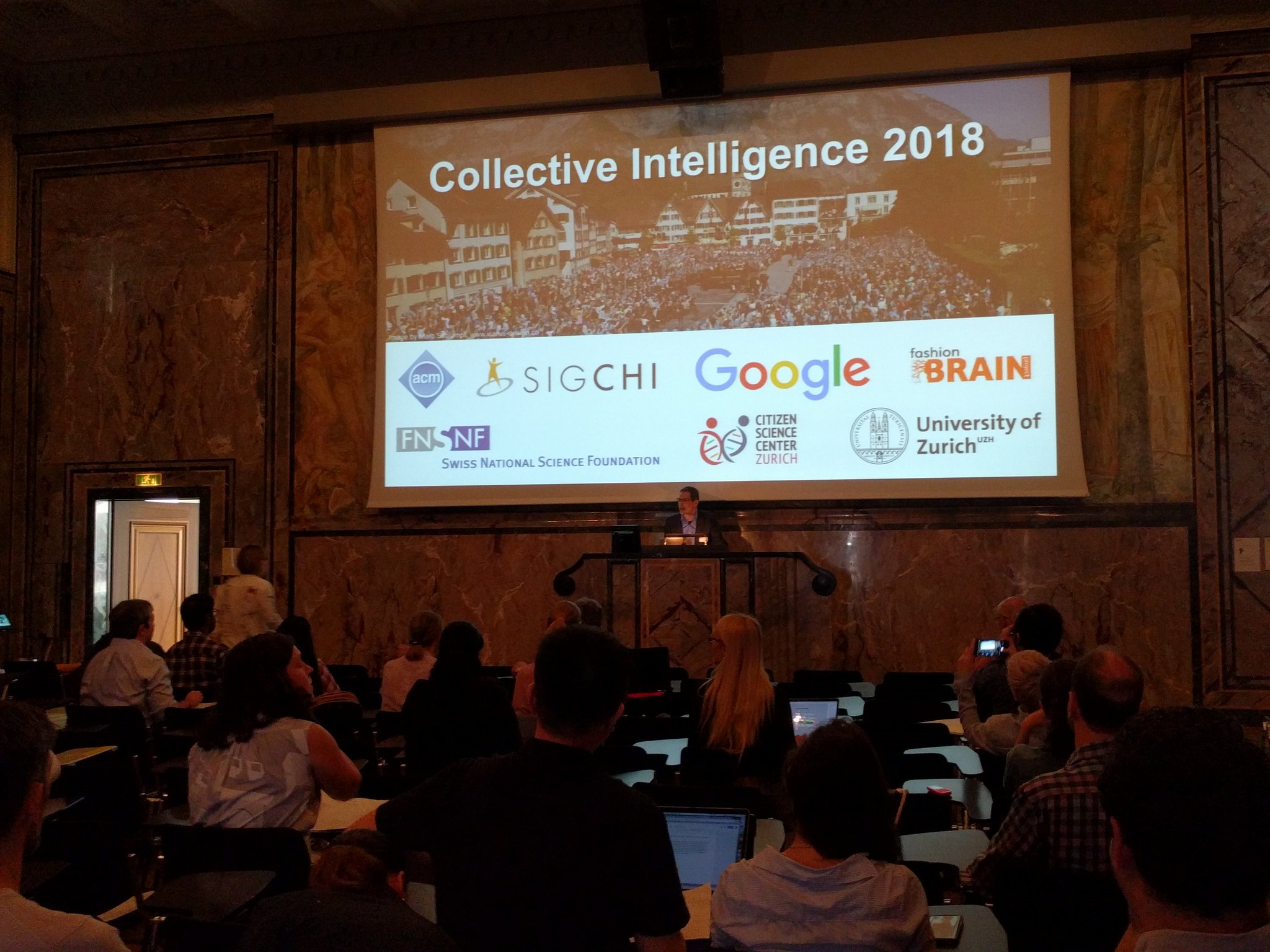
Prof. Bernstein opens CI2018
CI attracted 75 participants stemming from 16 different countries, HCOMP had about 95 participants from 17 different countries.
Keynotes
Patrick Meier (WeRobotics) introduced his work at WeRobotics in the digitalization of humanitarian activities, including the Flying Labs: a global network of local knowledge hubs where locals are empowered by sharing equipment for and knowledge about drones. He showcased the possibilities of technology in humanitarian aid, and invited the attendees to collaborate to further harvest the possibilities.
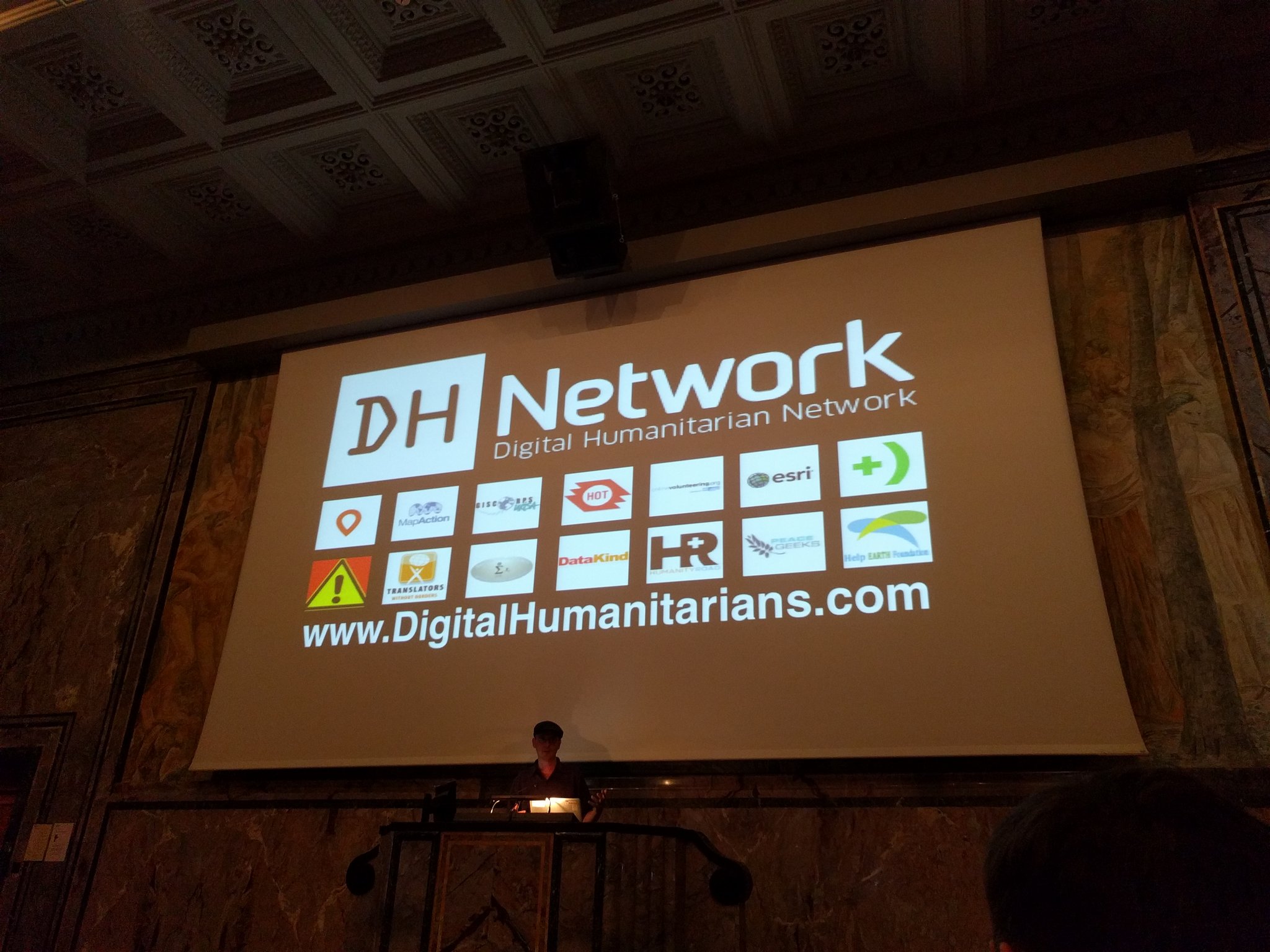
Patrick Meier from WeRobotics
Lucy Fortson (University of Minnesota) presented the latest research around the Zooniverse project, one of the most successful citizen science projects, that started in 2007 with 1 million galaxies and has collected around 40 million classifications by approximately 150K users. Lucy explained the importance of combining human and machine intelligence optimally, and mindfully using human attention. Moreover, Lucy encouraged the audience to start their own projects in Zoouniverse, as it provides a DIY platform that can host image and text annotation and transcription tasks.
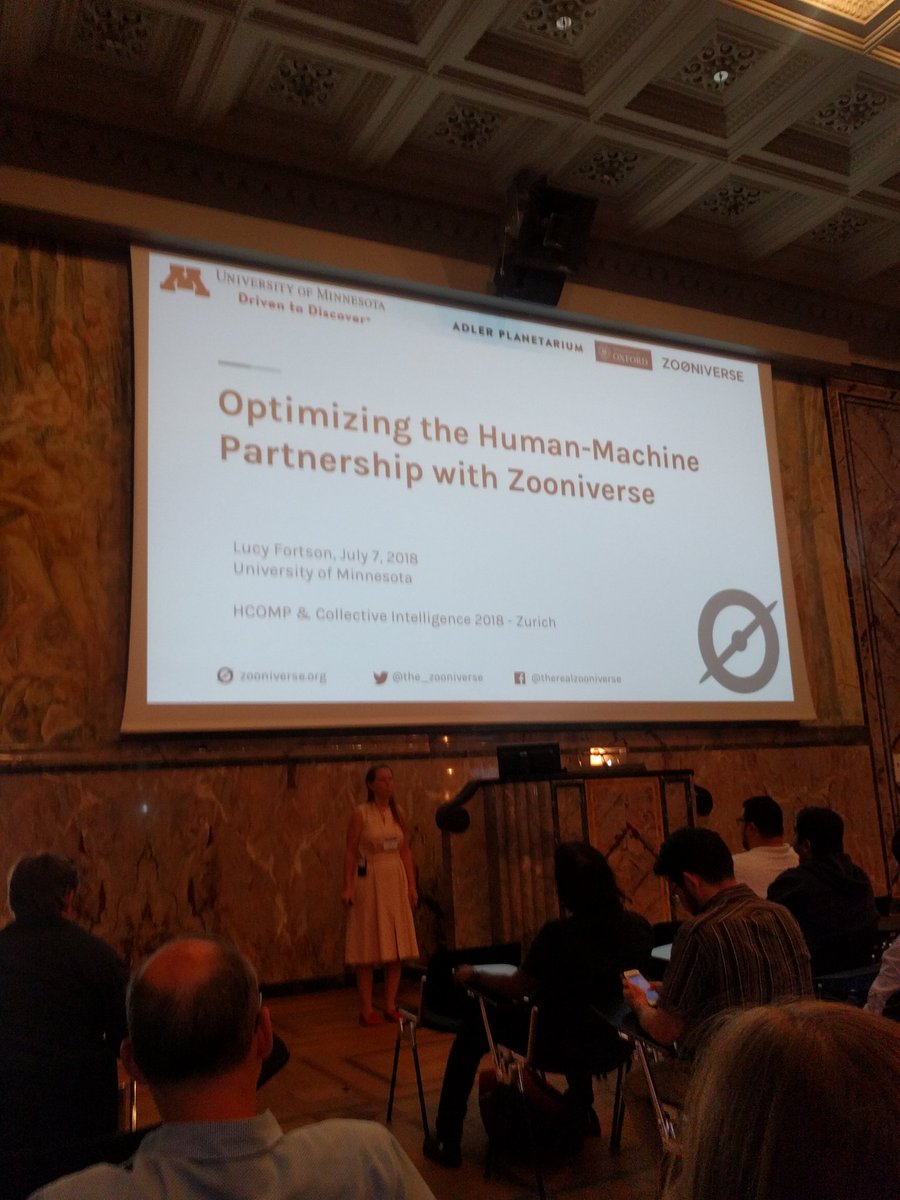
Lucy Fortson presenting Zooniverse
Scott Klemmer (University of California San Diego) gave a broad overview on his work about learning through collective intelligence through MOOCs, highlighting the importance of space design. Scott emphasized how important peer and self-assessment is in open-ended work.
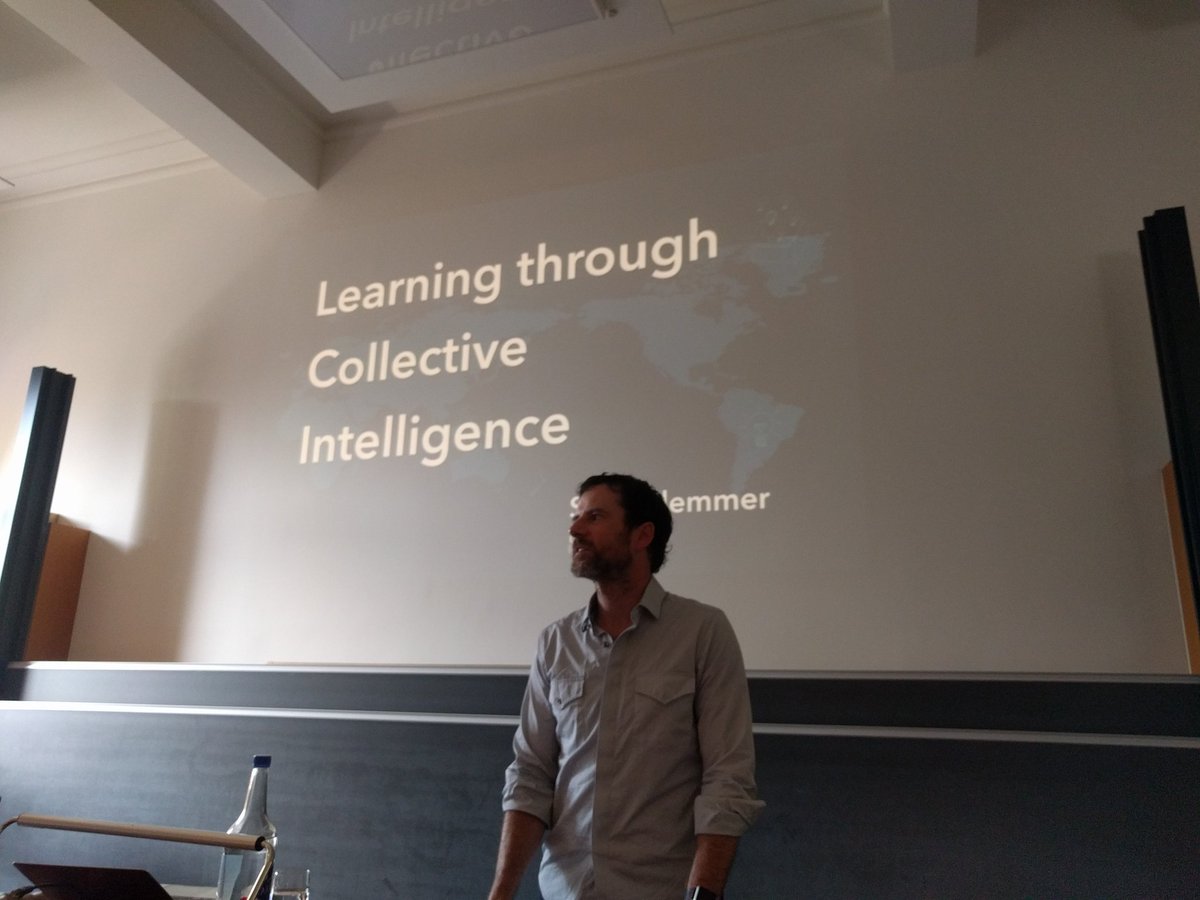
Scott Klemmer on design and collective intelligence
Eszter Hargittai (University of Zurich) presented her findings on digital inequality and reminded the audience that we should acknowledge that different parts of the population use different systems and even in the same systems, different cohorts behave differently. Hargittai et al. defined a framework to study online participation in systems like Wikipedia, and observed that Internet skills and having the necessary know-how is crucial to active participation in systems driven by collective action.
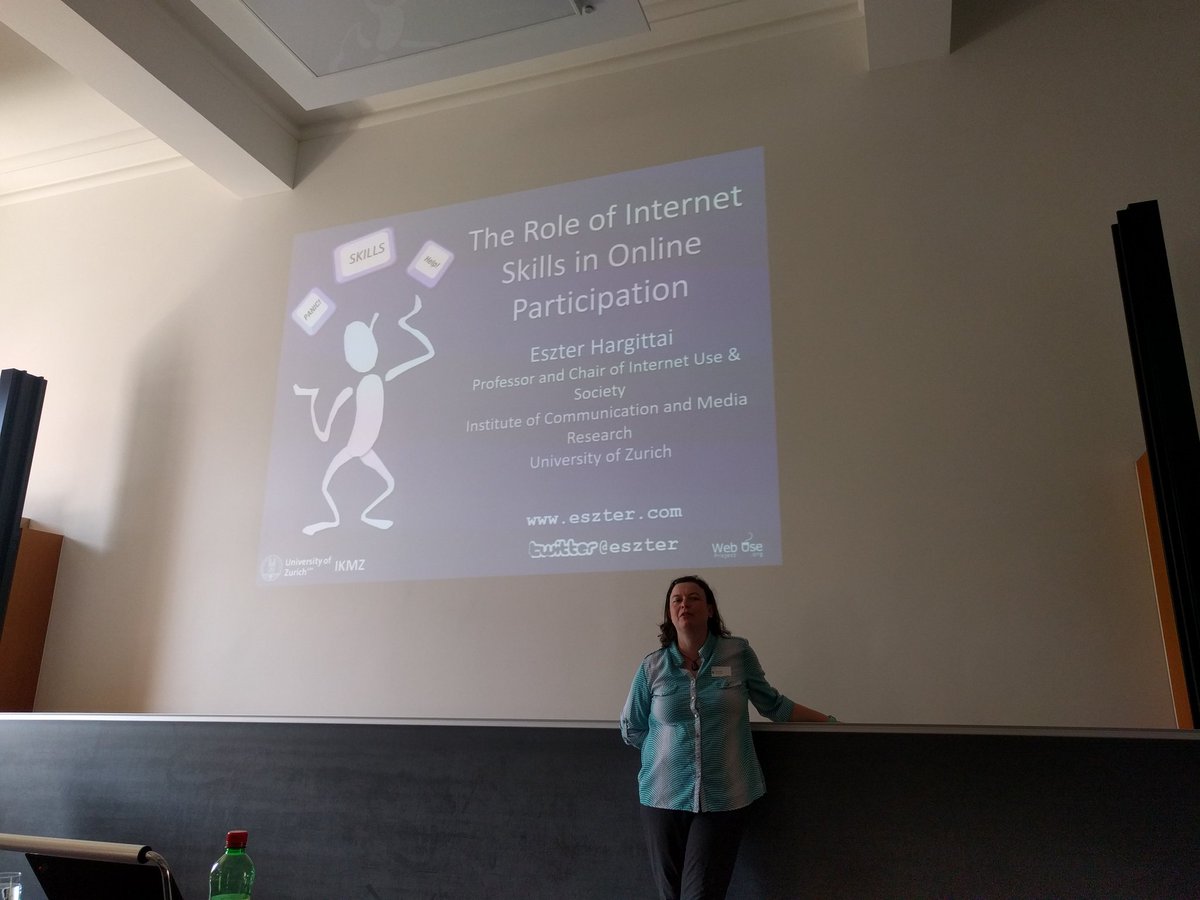
Eszter Hargittai on the digital divide and digital skills
HCOMP
Panel
The HCOMP panel focused on the need of ethics management in crowdsourcing, to ensure that all sides (including crowd workers and requesters) receive a fair treatment and fulfill their expectations. There was a global agreement on the fact that, despite valuable initiatives like the Guidelines for Academic Requesters, there is much work to do to improve the current crowdsourcing landscape.
The CI panel presented different points of view, and Prof. Thomas Malone (MIT Sloan) urged the audience to work on the three major questions that remain unanswered: (i) How can crowds help solve really complex problems? (ii) How can we attract the right crowd? (iii) How can we best combine crowds and experts?
Workshops
HCOMP hosted a couple of workshops, including CrowdBias (https://www.ifi.uzh.ch/crowdbias) organised by Alessandro Checco (University of Sheffield), Gianluca Demartini (University of Queensland), Ujwal Gadiraju (Leibniz University of Hannover) and Cristina Sarasua (University of Zurich).
Kristy Milland (community manager of TurkerNation) and Jahna Otterbacher (Open University of Cyprus), keynote speakers of the workshop, provided useful insights on the way workers interpret and optimize crowd work, and the impact that humans’ biases have in information systems. Some of the key topics brainstormed and discussed included the need for a taxonomy of biases in crowdsourcing, methods to present bias information to end users and mechanisms to profile crowd workers and their biases over time.
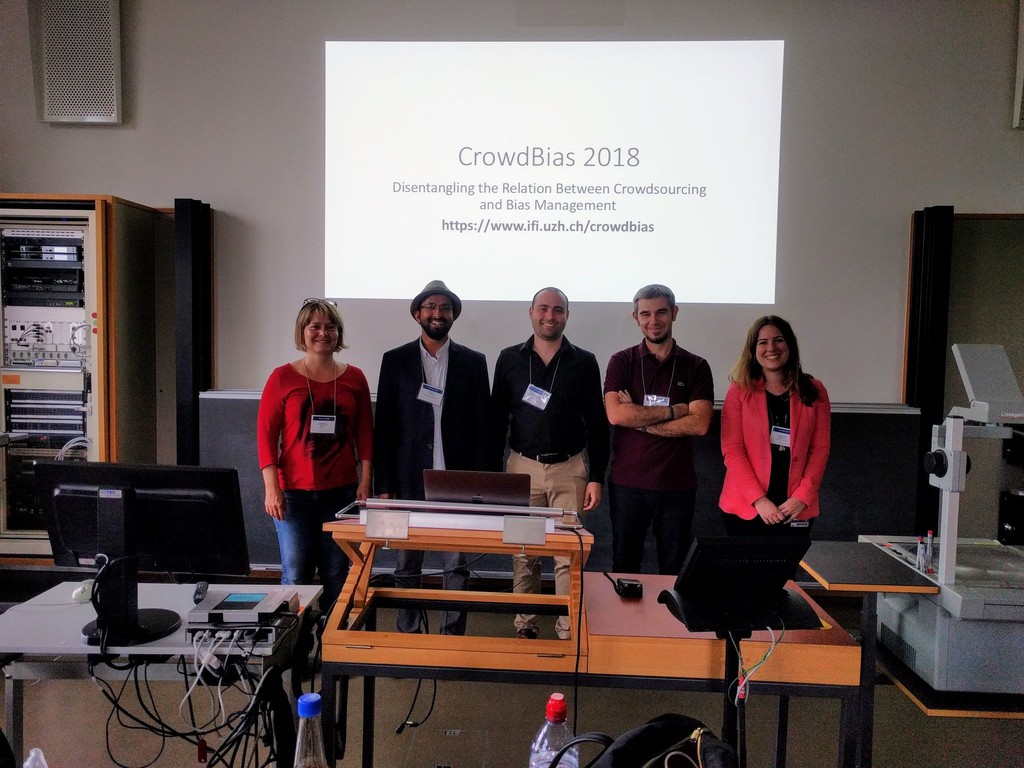
Workshop on CrowdBias
Best Paper Award
HCOMP gave the best paper award to Alessandro Checco, Jo Bates and Gianluca Demartini for their work All That Glitters is Gold — An Attack Scheme on Gold Questions in Crowdsourcing, that presents a method to identify gold questions in microtasks automatically and encourages the human computation and crowdsourcing community to rethink the mistrust paradigm that crowdsourcing platforms’ follow. Besmira Nushi, Ece Kamar and Eric Horvitz got an honorable mention for their work Towards Accountable AI: Hybrid Human-Machine Analyses for Characterizing System Failure, that defines a method to profile when and how a system fails via crowd data, and helps improve AI accountability. The best paper award was given to Vikram Mohanty, David Thames, Kurt Luther, on their demo around face recognition to identify civil war soldiers.
Next Year
In 2019 both conferences will go back to the US. CI 2019 will take place in Pittsburgh, PA and will be chaired by Anita Woolley (Carnegie Mellon University). HCOMP 2019 will be in Stevenson, Washington, USA.
We hope you enjoyed as much as we did!
The University of Zurich team.
Abgelegt unter: Allgemein
14. June 2018 |
Suzanne Tolmeijer |
Comments Off on Wikidata Datathon
On Saturday June 16 we will host the Wikidata Zurich Datathon at UZH (BIN building):
We will help data providers prepare and publish their data in a Wikidata-friendly way. The statistical offices of the city and the canton of Zurich (Open Data ZH and OGD Kanton ZH), Open Data Thurgau, SBB and PLAZI will be there.
If you would like to learn about
Wikidata and help modelling data, transforming data, linking entities, injecting data into Wikidata and setting up local Wikibase repositories, you are welcome to participate.
Registration is free and it can be done here:
Abgelegt unter: Allgemein
22. May 2018 |
Suzanne Tolmeijer |
Comments Off on Celebrate everyone!
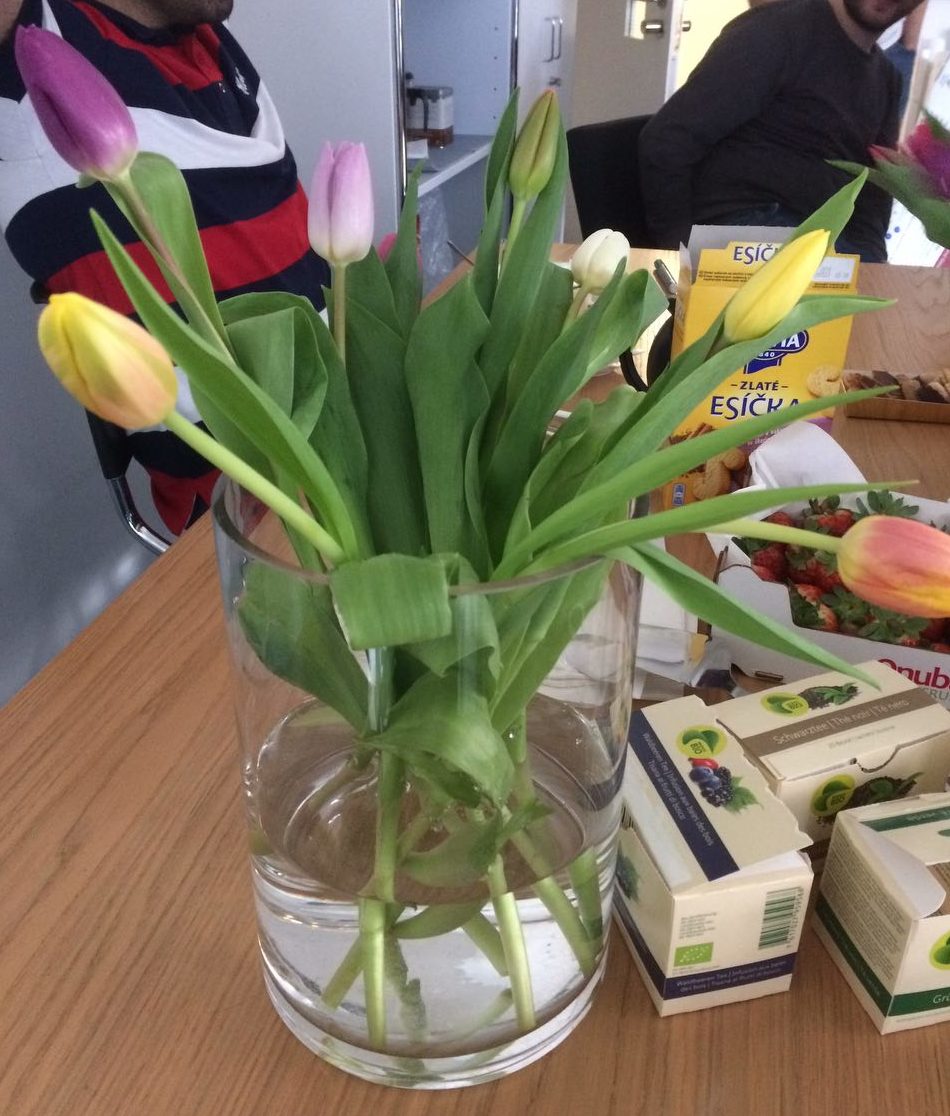
The 8th of March was International Women’s day, and reason for our male colleagues to show their appreciation for their female colleagues through flowers and sweets. As they said, unfortunately, it is not a given that women have equal rights and opportunities, and it is important to strive for this. A gesture that was much appreciated!

Flowers, sweets, and an equally sweet speech
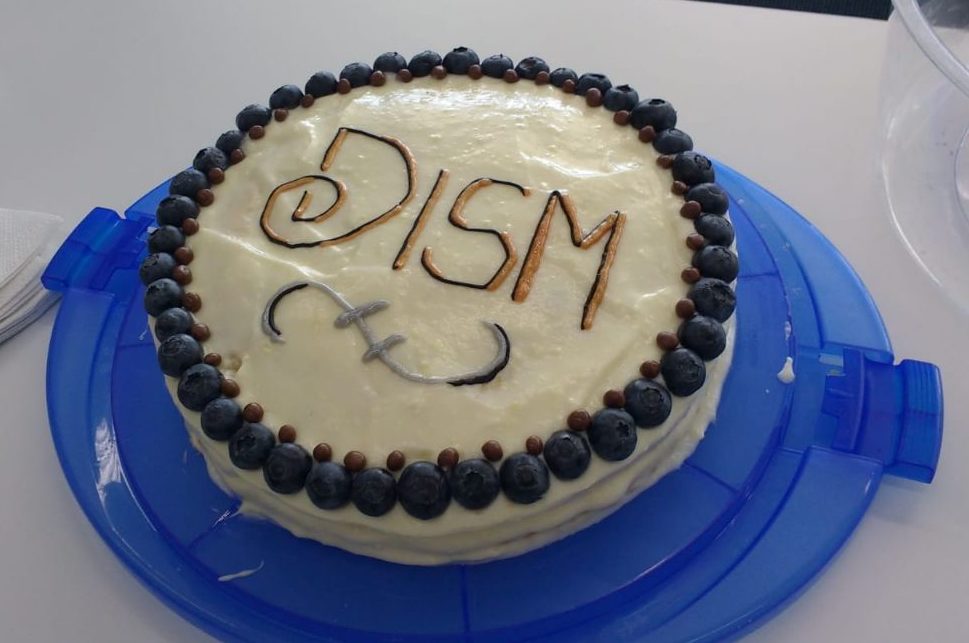
However, striving for equality implies that when women are celebrated, so should men. For this reason, last Thursday, DDIS-Men’s day was initiated and used the assumption ‘the way to a person’s heart is through the stomach’. It turned out to be a solid premise, and a tradition that will remain at DDIS.
Besides, any reason to have cake is a good one!
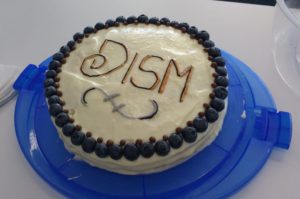
Dynamic and Distributed Systems – Men’s cake

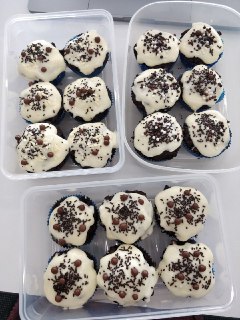
Double chocolate cupcakes with extra chocolate, anyone?
Abgelegt unter: Allgemein
1. May 2018 |
Suzanne Tolmeijer |
Comments Off on First Wikidata Zurich Meetup
Last Wednesday 25.04 our colleague Cristina Sarasua organised the first Wikidata Zurich meet up, together with Wikimedia CH. It took place at Kraftwerk by Impact Hub Zurich. Cristina gave an introduction to the meet up series and the Wikidata ecosystem, and then Jens Ohlig from Wikimedia DE showcased and explained the Wiki and the Query Service of Wikidata. The vibe was great and there were many interesting questions. The next Wikidata Zurich Meetup will be closer to the summer. We look forward to seeing you all there!
Impression of the event and link to materials:
https://twitter.com/csarasuagar/status/989553513209450496
Abgelegt unter: Allgemein
1. May 2018 |
Suzanne Tolmeijer |
Comments Off on Article accepted at the Journal of CSCW
Cristina Sarasua, together with her co-authors, Alessandro Checco, Gianluca Demartini, Djellel Difallah, Michael Feldman and Lydia Pintscher, got a paper accepted in the Journal of Computer Supported Cooperative Work. The link to their paper, titled ‘The Evolution of Power and Standard Wikidata Editors: Comparing Editing Behavior over Time to Predict Lifespan and Volume of Edits‘, will be added as soon as the special issue of the journal is published. More information about the paper can be found below.
Abstract:
Knowledge bases are becoming a key asset leveraged for various types of applications on the Web, from search engines presenting `entity cards’ as the result of a query, to the use of structured data of knowledge bases to empower virtual personal assistants. Wikidata is an open general-interest knowledge base that is collaboratively developed and maintained by a community of thousands of volunteers. One of the major challenges faced in such a crowdsourcing project is to attain a high level of editor engagement. In order to intervene and encourage editors to be more committed to editing Wikidata, it is important to be able to predict at an early stage, whether an editor will or not become an engaged editor. In this paper, we investigate this problem and study the evolution that editors with different levels of engagement exhibit in their editing behaviour over time. We measure an editor’s engagement in terms of (i) the volume of edits provided by the editor and (ii) their lifespan (i.,e. the length of time for which an editor is present at Wikidata). The large-scale longitudinal data analysis that we perform covers Wikidata edits over almost 4 years. We monitor evolution in a session-by-session- and monthly-basis, observing the way the participation, the volume and the diversity of edits done by Wikidata editors change. Using the findings in our exploratory analysis, we define and implement prediction models that use the multiple evolution indicators.
Authors:
Cristina Sarasua, Alessandro Checco, Gianluca Demartini, Djellel Difallah, Michael Feldman and Lydia Pintscher
Abgelegt unter: Publications
14. March 2018 |
Suzanne Tolmeijer |
Comments Off on Double success at WWW for Tobias Grubenmann
Good news for PhD student Tobias Grubenmann: not one, but two of his papers got accepted at the next Web Conference in April. This conference, formerly known as the WWW Conference, is a highly regarded conference in the field of the world wide web. Tobias will be there to present ‘Financing the Web of Data with Delayed-Answer Auctions‘, in which he and his colleagues suggest an auction mechanism with delayed answers to a query on the Web of Data, to make sure sponsored data gets privileged over non-sponsored data. With this new concept, a first step is taken towards a free yet financial sustainable Web of Data.
Besides this paper, he will also present his work at the PhD Symposium, where PhD students can present their ongoing research. In his paper, called ‘Monetization Strategies for the Web of Data‘, he introduces his take on how to make the Web of Data sustainable by finding ways to finance the creation and maintenance of content on the Web of Data.
Abgelegt unter: Conference⋅ DDIS-People
7. March 2018 |
Suzanne Tolmeijer |
Comments Off on ‘Everyone should learn how to deal with data’
For their first news bulletin of 2018, Swiss ICT association Asut interviewed Prof. Bernstein concerning the theme ‘Kids and Codes: education for a digital world’. In this interview, Prof. Bernstein expressed the opinion that in our current information society, it is important for people to learn the skills necessary to deal with digitalisation, such as coding, and more importantly, how to deal with data. To read the entire article, click here (article in German).
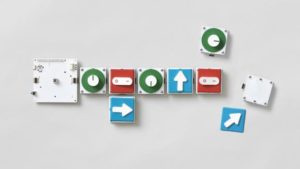
Which skills are needed in the 21st century? How should digitisation change our education? Source: Asut
Abgelegt unter: Press
25. January 2018 |
Suzanne Tolmeijer |
Comments Off on Digital Democracy – Too risky or the chance of a generation?
In an article on SWI Swissinfo.ch on the risks and chances of a digital democracy, Prof. Dr. Abraham Bernstein gives his view on the matter. He argues in favour of “making citizens aware of political issues online and via smartphones, fostering discussions, getting quick feedback from the people on political issues, and simplifying the collection of signatures”. More about the current state of the debate can be found here.

Democracy and political engagement right in your pocket?
Abgelegt unter: Allgemein⋅ Press
14. December 2017 |
Suzanne Tolmeijer |
Comments Off on Abraham Bernstein on SRF Radio about digitalisation and politics
Increasing digitalisation is happening in many different domains in Switzerland, but politics does not seem to be among them (yet). In radio show ‘Heute Morgen’ on SRF1, different experts were asked about how digitalisation could impact politics in Switzerland. Abraham Bernstein thinks politicians should be more courageous and adapt partially obsolete political processes by using the available technology. More people can be involved in the debates around political issues using tech, an opinion he also expresses with other researchers in their manifesto on digital democracy. The radio fragment can be found here (German audio and text).
Abgelegt unter: Press
11. December 2017 |
Suzanne Tolmeijer |
Comments Off on Shen Gao successfully defends his thesis
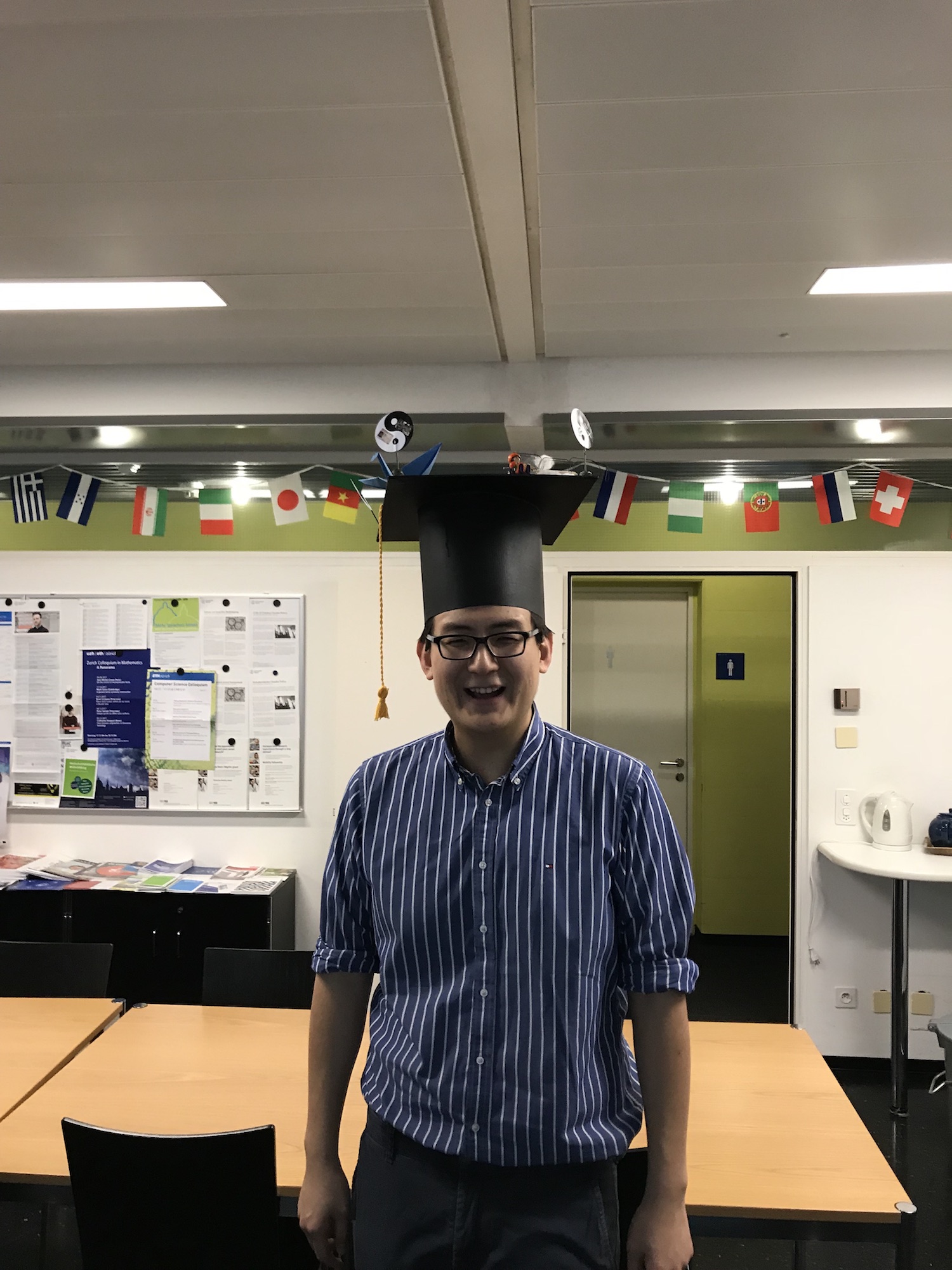
On the 4th of December, Shen Gao successfully defended his thesis on ‘Efficient Processing and Reasoning of Semantic Streams’. Both his supervisors Prof. Dr. Abraham Bernstein of the University of Zürich and Prof. Dr. Jeff Pan of the University of Aberdeen were present to challenge Shen with questions and ultimately grant him his doctor’s title. As for the future, he has been hired to join Google. We wish him all the best!
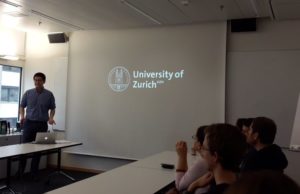
Shen presenting his thesis
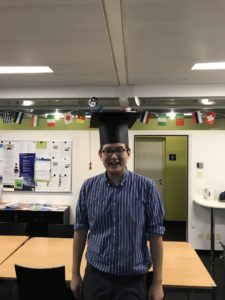
Dr. Gao!
Abgelegt unter: DDIS-People